AUTHOR: SYDNEY MIRANDA
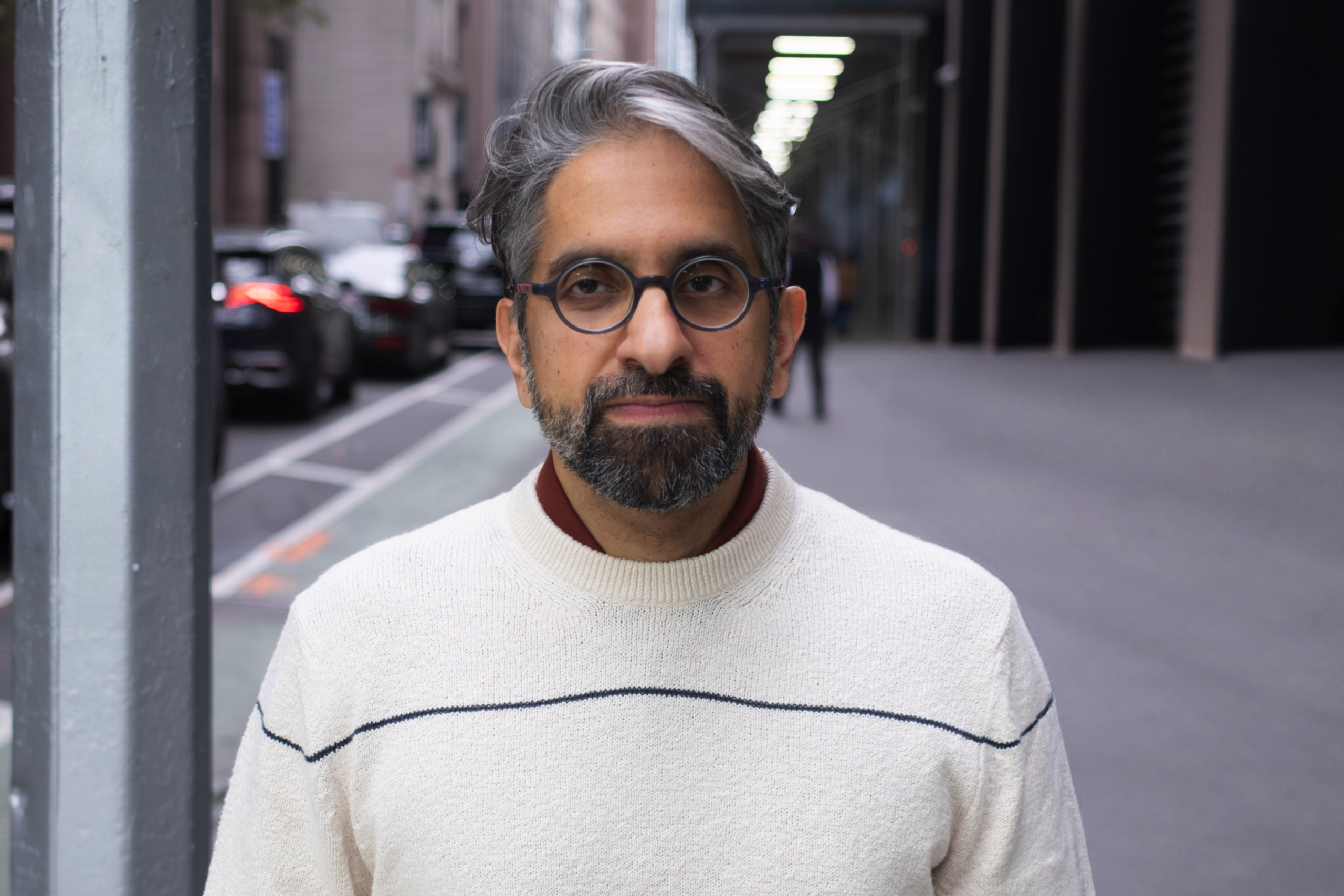
There is a particular kind of person who collects art not to possess it, but to protect it. Sultan Sooud Al Qassemi is that person. As the founder of the Barjeel Art Foundation, now home to over 2,200 works of modern and contemporary Arab art, he has spent more than two decades operating like a guardian, quietly building one of the most significant private art collections in the Arab world and then, just as quietly, giving it back.
He speaks with rare candour about the mission that has shaped his life’s work: breaking ground on Barjeel’s first dedicated museum in Sharjah, set to open in January 2028; co-editing a landmark book bridging Arab and Indian art; and reflecting on the Arab Spring, a moment he calls the most consequential of his lifetime.
What emerges is a portrait of a man who thinks in centuries. The paintings on his walls have outlasted empires and civil wars; the museum he is building is designed not for grandeur but for maximum visibility of the work itself. For him, art is a testimony proof that a culture existed, endured, and had something worth saying to the world.
The Barjeel Art Foundation was established in 2010 and now holds over 2,000 pieces of modern and contemporary art, primarily by Arab artists worldwide. When you acquired that very first work, did you think of yourself as building something for the public, or was it a deeply private obsession that only later found a bigger purpose?
I started collecting in 2002, and in those early years there was no real strategy. I was buying art from India, Pakistan, Iran, Ethiopia, Europe, the US, really all over. That’s common with young collectors. It was only with time that things evolved and I decided to focus on art from the Arab world.
The UAE belongs to so many spheres which include the Indian Ocean, the Gulf, Southeast Asia, the Islamic world; but I chose the Arab world because I wanted to build a collection that was culturally significant and could serve a soft power, diplomatic function. And from the very beginning, the intention was always to share it. To share it meaningfully, it had to have a focus.
You were just telling me about your latest book, Resonant Histories: India and the Arab World, exploring cultural exchange between Arab and Indian art. Can you speak more about it?
The book was published earlier this year by Mapin Publishing in India. It was co-edited by Suheyla Takesh, Director of the Barjeel Art Foundation, Puja Vaish, Director of the Jehangir Nicholson Art Foundation in Mumbai, and myself.
It was published on the occasion of what I believe is the very first exhibition of Arab world art from a private collection, to be held in India. Over a dozen countries are represented: the Gulf, Egypt, Syria, Palestine, Lebanon, and more. It was a real opportunity to show Indians art from a region where many of their friends and family members live, and to explore the complementary nature of both cultures, such as shared themes around the household, religion, women, and portraiture. The co-curators did a remarkable job drawing out those parallels.
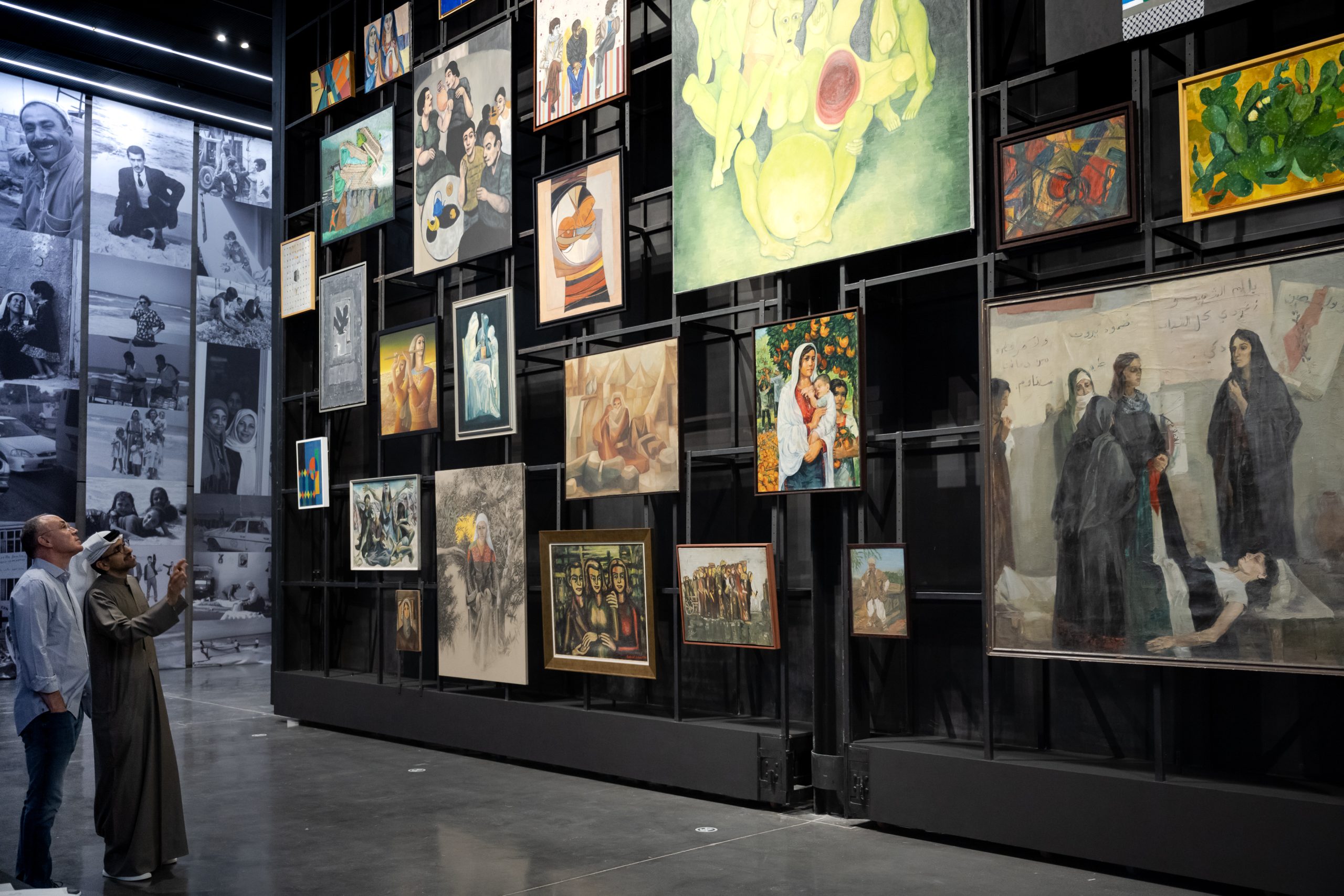
Christina Dimitrova. Image courtesy of Barjeel Art Foundation, Sharjah.
At Art Dubai this year, you spoke about the resilience embedded in your works – noting that some pieces survived the First and Second World Wars, civil wars, and more. When you look at a canvas, do you see the painting, or do you see its entire journey to get to you?
I always think of myself as a custodian, never an owner. When I founded the Barjeel Art Foundation, I deliberately gave it its own name separate from mine because these works existed before me and will exist long after I’m gone. My role is just a brief chapter in their existence.
The paintings we have from the turn of the last century survived World War One, World War Two, wars of independence, and displacement. That’s true not just in the Arab world but across Europe too, where some of the deadliest conflicts in history destroyed so much of their art. So the works that are still with us are genuinely precious time capsules.
We do our best to honour that: every acquisition goes to a restorer if needed, we look after the works rigorously, and we share them widely. We’ve lent to over 150 institutions, mounted around 30 international exhibitions, and sent works to Japan, Korea, Singapore, India, Iran, and beyond. Also the collection has now surpassed 2,200 artworks. It’s not a numbers game, but the scale has grown considerably.
You’ve just broken ground on Barjeel’s first dedicated museum – a 38,750-square-foot building in Sharjah, due to open in January 2028. After nearly two decades of building this collection, what does it feel like to finally commit to four walls?
It’s always been the dream.
When I first wrote to the Sharjah Government in 2009 asking for a space, we had 40 artworks. Now we have over 2,000. These works need to be seen. I feel a genuine guilt knowing that masterpieces are sitting in storage or being viewed only privately when they belong in front of the public.
Building a museum completes the arc if you truly believe your mission is to safeguard rather than own, the endpoint has to be making art available to everyone.
The Sharjah government gave me the land over ten years ago, and I sat with it for years thinking about design, budget, possibilities. Then I decided: just do it. My advice to anyone building a cultural institution is to simplify the design. Don’t get caught up in grand architectural statements, that’s the role of governments, not individuals. The simpler the design, the more achievable the goal, – especially when costs rise unexpectedly and they always do.
Even with our modest budget, the regional situation shifted and premiums went up across the board. Simplicity also means more wall space for the art itself, which should always be the priority. If your goal is to show the work, maximize the space for showing the work.
At Art Dubai’s 20th anniversary Global Art Forum, you joined a panel looking back at Dubai’s entire cultural landscape in the 2000s. How different does that early scene feel from where things stand now? And which version was more exciting to be part of?
That panel brought together three dear friends – Shumon Basar, Antonia Carver, and Sunny Rahbar. People I’ve been on this journey with since the early 2000s. Art Dubai was genuinely pivotal: it professionalized the entire industry. It meant you needed proper insurance, logistics, transportation, hotels and airlines stepping up. It brought collectors from around the world into the same room as regional artists and galleries. I feel privileged to have witnessed it from the very beginning. But I resist nostalgia.
The UAE’s art ecosystem today is richer and more mature in every way, more galleries, more art handlers, professional storage facilities, an entire infrastructure that simply didn’t exist before. Young people today are doing extraordinary things: exhibiting internationally, building audiences online, pushing the conversation in ways we couldn’t have imagined. And if you go back even further, the 1970s in the UAE had its own wave of remarkable initiatives. Every generation has its moment of excitement. We’re lucky to witness the arc of it so far.
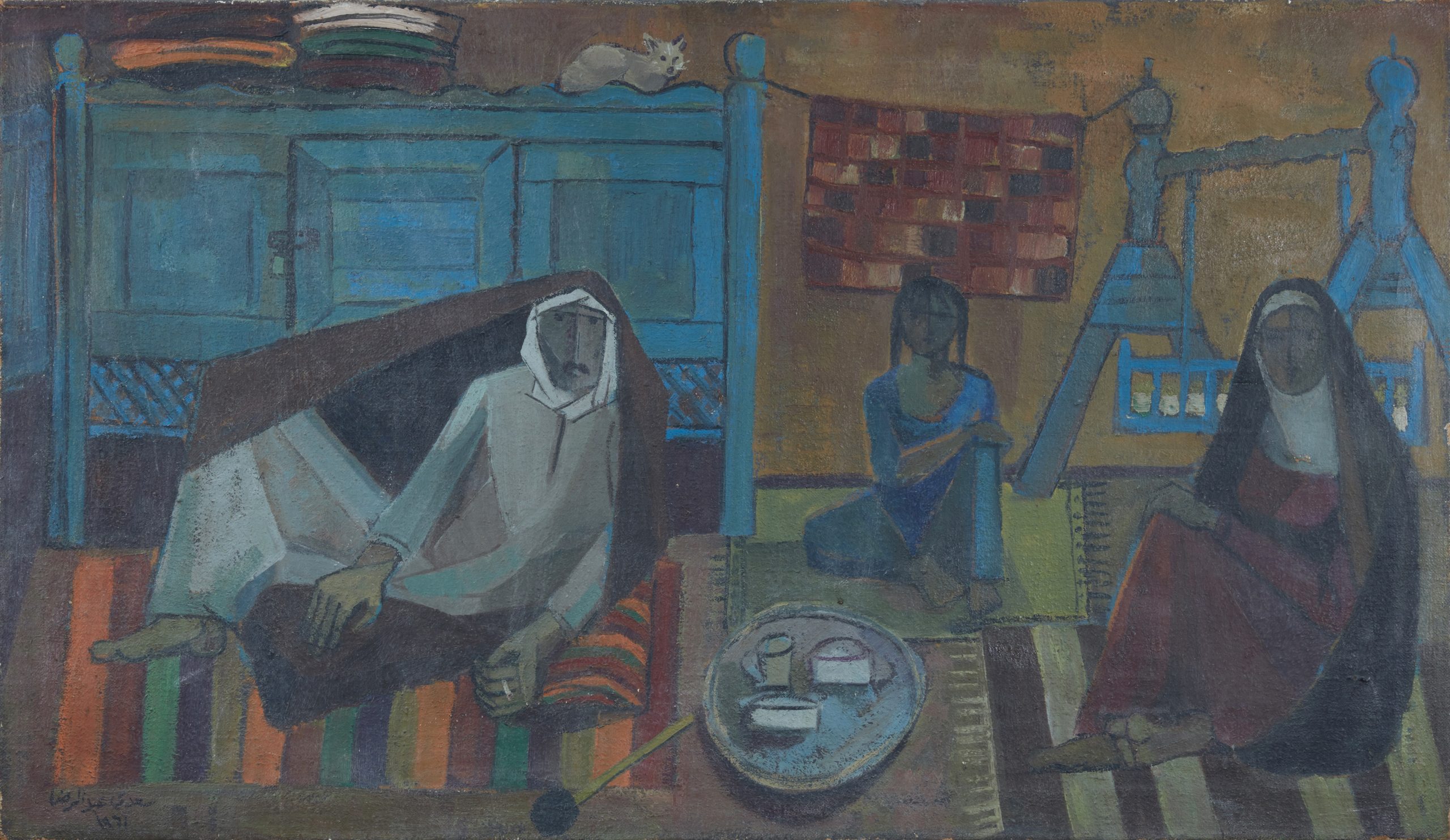
Barjeel Art Foundation, Sharjah.
If Barjeel’s collection had a soundtrack, what would it be?
I’ve actually thought about this seriously, whether to play music in the museum and, if so, what.
My instinct is Fairuz, because she captures the mood of mid-20th century Arab life, which is the heart of our collection. That era Fairuz, Mohammed Abdel Wahab, Abdel Halim Hafez, Warda from Algeria, the music mirrors the art in spirit and period.
But honestly? In my heart, I’m deeply into Arab hip-hop. My gym music, my driving music, the music I play when I’m writing – it’s Palestinian hip-hop. The corridor from Amman to Ramallah to Haifa is where I find my favorite artists: Emsallam from Amman, Synaptik from Ramallah, Ward Al Tineen from Haifa. I’ve been lucky to actually meet and spend time with many of them, Shabjdeed, DodiX and Mahasneh. It’s raw, political, emotionally honest music, and Arabic hip-hop at its best is completely intertwined with lived experience in a way that moves me deeply.
That said, I’ve also been to six Fairuz concerts, as well as Majida El Roumi amongst others so the full range is there. And I’d find a way to include some Khaleeji music too, Mohammed Abdu from Saudi Arabia would absolutely be on the playlist.
During the Arab Spring 15 years ago, you were one of the most prominent Khaleeji commentators. How do you think that era altered the trajectory of the region, politically and culturally?
The Arab Spring was a genuine explosion, a convergence of grievances such as unemployment, lack of opportunity, lack of freedom, all of it finally giving way at once. Many voices came together, and while I didn’t agree with all of them, the underlying grievances were real.
It’s the most consequential moment of my life. If I live another fifty years, nothing will match it in terms of what it meant historically. And I do feel the weight of how it unfolded. The aspirations I believed in and many others shared mostly didn’t materialize. In a lot of countries, things are worse than they were. But not everywhere.
I just came back from Syria last week – I was in Damascus during Eid and the energy there was something else entirely. People want to re-build, want to create. Cafes and bookstores opening, museums reopening, people returning to the city. The last chapter hasn’t been written yet.
This shift toward cultural globalization and modernization is no longer limited to the Gulf. Do you think cultural globalization dilutes Arab culture or gives it resilience?
Someone once told me the best way to protect your culture is to share it because once you share it, it enters the global conversation and takes root elsewhere. I believe that deeply. Palestinian cuisine is now being recognized around the world in a way it wasn’t a decade ago. UAE restaurant brands are opening in London. Lebanese fashion designers like Elie Saab are dressing the biggest stars in America. These aren’t losses, they’re expressions of a culture finding its place globally.
And this isn’t just a Gulf story anymore: we see it in Egypt, Morocco and Syria. I also think we have to support each other across the region. The rising tide lifts all boats as the saying goes. It’s better for the UAE when India does well, when Saudi Arabia does well, when Egypt does well.
Prosperity is not zero-sum. I hope I live to see the day when we’re all trading with each other, rising together. Even in difficult moments, that’s worth aspiring toward.
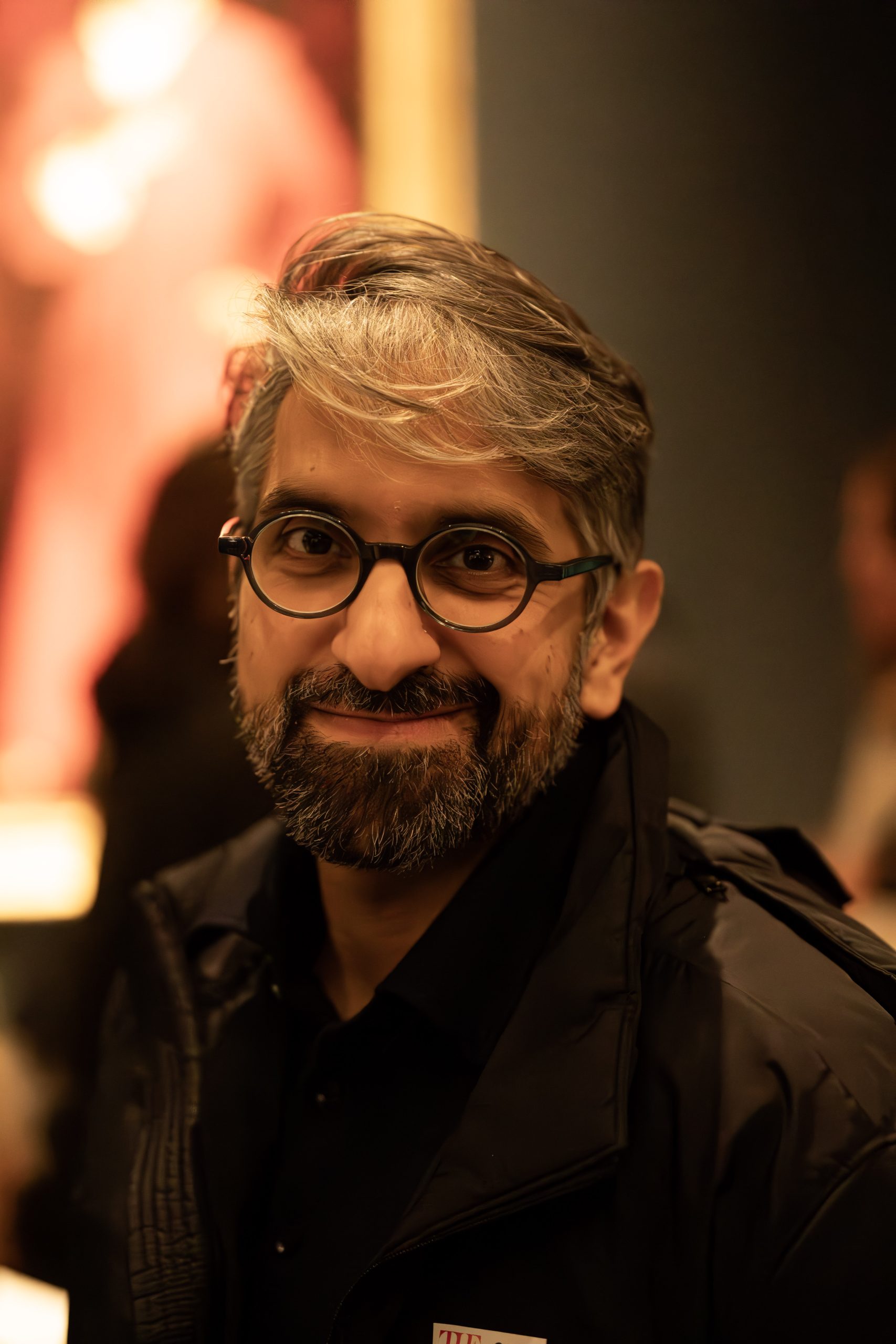
Photo Ghanem Irba, @ghanem.irba
What’s one blind spot and one competitive advantage you think the Arab art and culture world has?
The biggest blind spot is access or the lack of it. Great art is being made, but there are almost no places to see it and very little documentation available. Cairo, a city of that scale and cultural weight, has essentially one major art museum. There’s no contemporary art museum there at all, despite the extraordinary work produced since the 1990s. Syria’s national museum was closed for years. Iraq’s went through cycles of closing and reopening.
So the relationship between people and their own artistic heritage has been disrupted. We’re missing the infrastructure; the museums, the publications, the archives. That’s the gap.
The competitive advantage, though? Arab art is our story. It reflects us better than anything else. Play a Fairuz song and people start singing or humming along. We have the equivalent in visual art, masters whose work is just waiting to be seen or heard, metaphorically speaking. The moment people actually see these works, they fall in love. That’s what’s changing now, Arab art is reaching museums around the world, and the response is exactly what you’d expect. It’s a genuinely exciting moment.
The art scene has been spectacular in the region with new and upcoming artists. What advice would you give to them?
Read. More than anything else, read. Many young artists create without feeding their minds, and it shows.
I was looking recently at The Death of Socrates by Jacques-Louis David, and I was struck by the fact that he began a sketch of it five years before completing the painting. Not five weeks, not five months but five years of thinking, exploring, refining before the final work existed. Young artists need to give themselves that kind of time. They need to invest in understanding their culture, their history, and the world they’re operating in.
Art that comes from that depth resonates in a way that art made on impulse rarely does. But there’s a tendency to produce without the foundation that makes production meaningful. It’s like wanting to make great music without having really listened to music. You have to let things mature inside you before they come out.
This article was originally published in Rolling Stone on August 11, 2026. A screenshot of the original article can be downloaded here.
